- Home
- Categories
- Cities
- Blogs
-
Go to Searching & Listing Page
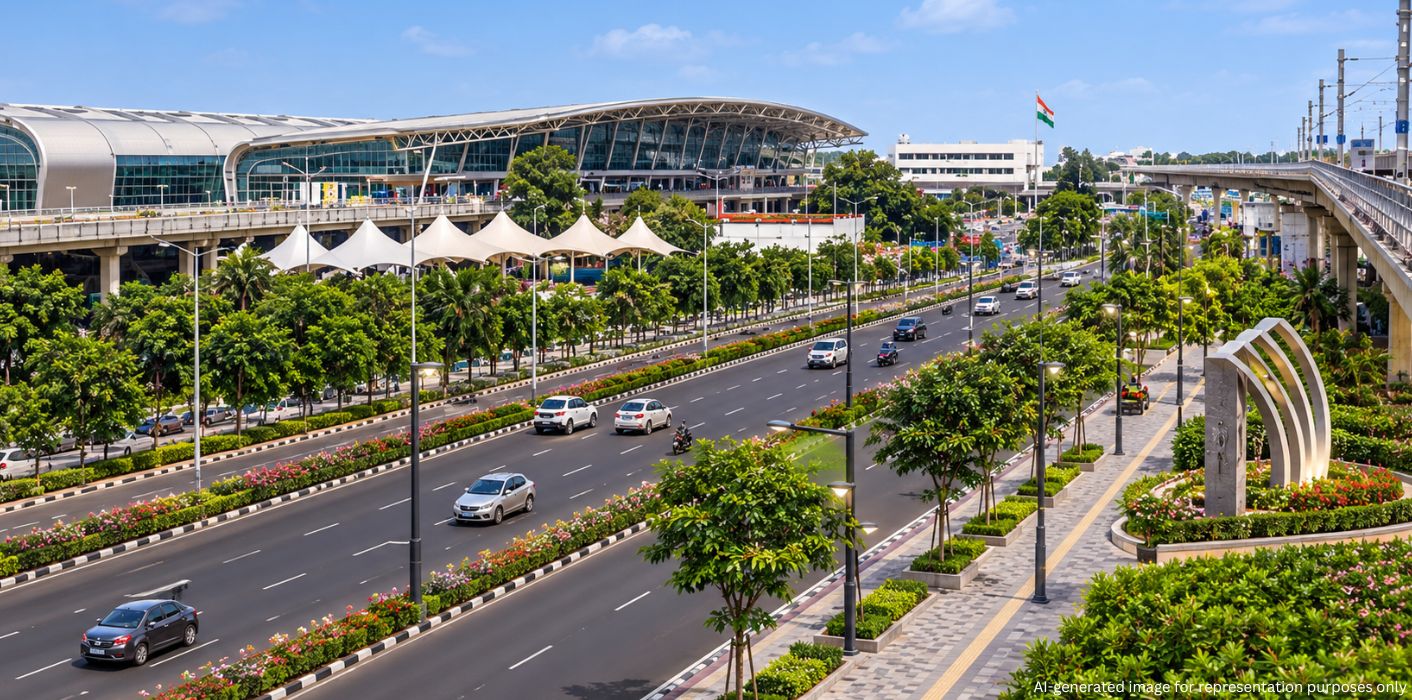
Chennai's first impression begins long before visitors reach its city centre. The approach from the international airport is set for a major transformation through the Gateway of Chennai project, an urban beautification and infrastructure initiative approved by the Tamil Nadu government under the Chief Minister's Integrated Urban Development Mission (CMIUDM) for 2026-27. Covering the 4.8-km stretch between Chennai Airport and the Kathipara grade separator, the project aims to create a cleaner, greener and more welcoming entrance to the city.
The Gateway of Chennai is a comprehensive makeover of the Grand Southern Trunk (GST) Road corridor, which serves as a major entry route for visitors arriving in the city. The initiative is intended to improve Chennai's urban appearance and establish a more organised visual identity through better landscaping, public infrastructure and pedestrian facilities.
Approved as part of a wider package of 680 road and civic infrastructure projects, the corridor's beautification component has an allocated budget of ₹131 crore. The broader package is valued at approximately ₹138.11 crore.
The initiative brings multiple government agencies together to address infrastructure and maintenance issues along a route that falls under different administrative jurisdictions.
The airport corridor currently faces several urban infrastructure and public space issues:
These conditions affect pedestrians, local commuters, residents and businesses. Visitors and international travellers also encounter these issues when entering Chennai, influencing their first impression of the city.
The project proposes several upgrades to address these challenges and improve the corridor's overall functionality.
Key improvements include:
The benefits will extend to several groups. Daily commuters and pedestrians stand to gain from improved walkways and better public spaces. Airport passengers, tourists and business visitors will experience a more welcoming entry into Chennai. Nearby residents and businesses can benefit from improved surroundings and better-maintained public infrastructure.
The makeover could also strengthen the appeal of neighbourhoods along Chennai's southwest corridor. Guindy, Meenambakkam, Pallavaram, Alandur and Chromepet are among the areas expected to benefit from improvements to their surrounding infrastructure.
For property buyers, better pedestrian access and improved public spaces could increase the attractiveness of residential locations. Properties within the influence of the corridor may also experience stronger rental demand and capital appreciation.
Hotels, retail outlets and showrooms along GST Road could benefit from improved visibility and a more presentable business environment. The transformation may also encourage redevelopment opportunities for older commercial buildings and residential properties.
Preparatory work was scheduled to begin in early November 2026, following government approval. Joint surveys, site inspections and utility mapping involve the Greater Chennai Corporation, Highways Department, Airports Authority of India, Cantonment Board and Chennai Metro Rail Limited.
The main civil and landscaping works reportedly have a four-month target completion window. Contractors are also expected to undertake a three-year operations and maintenance period to maintain the upgraded infrastructure after completion.
The Gateway of Chennai project aims to turn an infrastructure-heavy airport approach into a more organised and pedestrian-friendly urban corridor. Beyond its visual improvements, its impact will depend on coordinated execution across multiple agencies and sustained maintenance over the coming years.
1. What is the Gateway of Chennai project?
The Gateway of Chennai is an urban beautification and infrastructure improvement initiative covering the 4.8-km stretch between Chennai International Airport and the Kathipara grade separator. It aims to improve the city's main airport entry corridor through landscaping, modern lighting, redesigned footpaths and public art installations.
2. What is the budget for the Gateway of Chennai makeover?
The beautification component of the Gateway of Chennai project has been approved at ₹131 crore. It forms part of a wider package of 680 road and civic infrastructure projects valued at approximately ₹138.11 crore under the Chief Minister's Integrated Urban Development Mission (CMIUDM) for 2026-27.
3. What improvements are planned under the Gateway of Chennai project?
The project includes improved greenery, landscaping, modern street lighting, public art installations and redesigned footpaths. It also proposes removing damaged pavements and organising utility lines to reduce visual clutter and create a cleaner, more accessible airport corridor.
4. Which areas will benefit from the Gateway of Chennai makeover?
The 4.8-km airport-to-Kathipara corridor is the primary focus. Nearby areas expected to benefit from improved surroundings and infrastructure include Guindy, Meenambakkam, Pallavaram, Alandur and Chromepet. These locations could gain from better public spaces, pedestrian access and improved commercial visibility.
5. How will the Gateway of Chennai project benefit pedestrians and commuters?
The project will improve pedestrian infrastructure through redesigned footpaths and the removal of damaged pavements. Better street lighting and organised public spaces are also planned. These upgrades are expected to make walking along the airport corridor safer and more convenient for daily commuters, local residents and visitors.
6. When will the Gateway of Chennai project begin, and when is it expected to be completed?
Preliminary work on the Gateway of Chennai project is scheduled to begin in early November 2026. The main civil and landscaping works reportedly have a four-month completion target. Contractors are also expected to maintain the upgraded infrastructure through a mandatory three-year operations and maintenance period.