- Home
- Categories
- Cities
- Blogs
-
Go to Searching & Listing Page
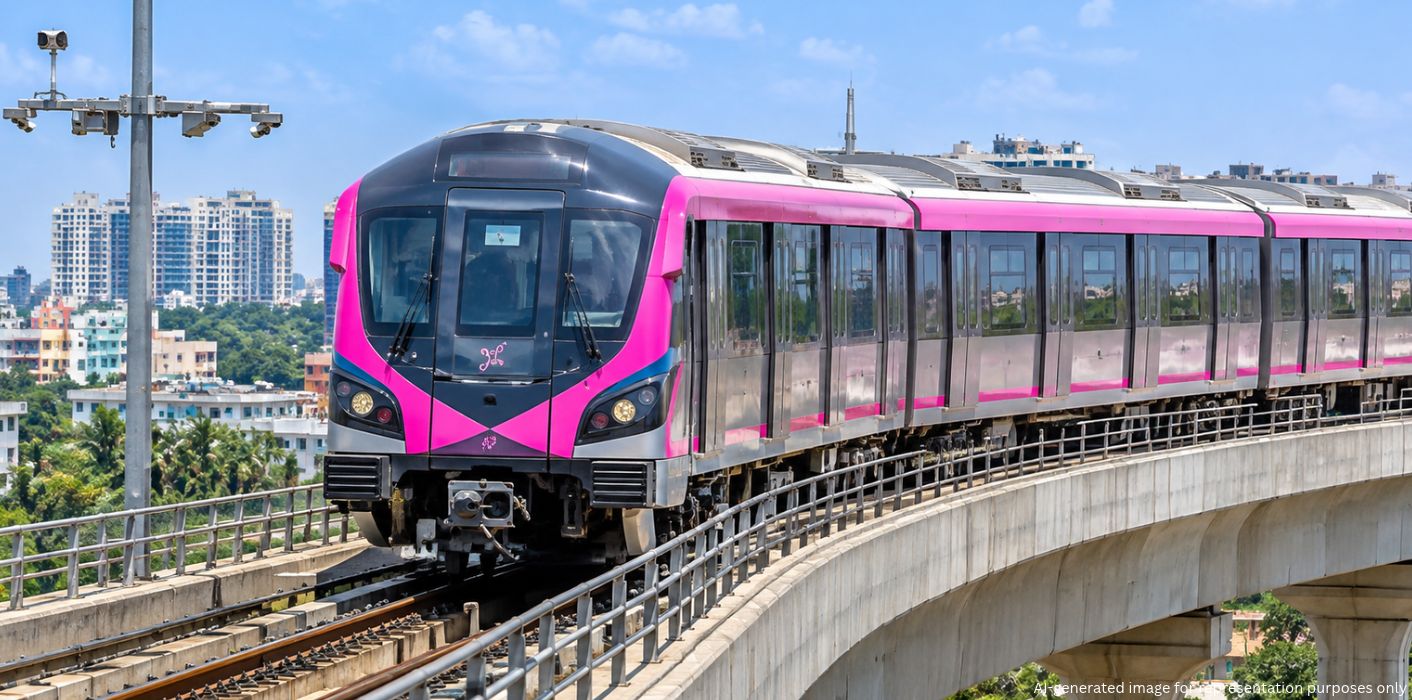
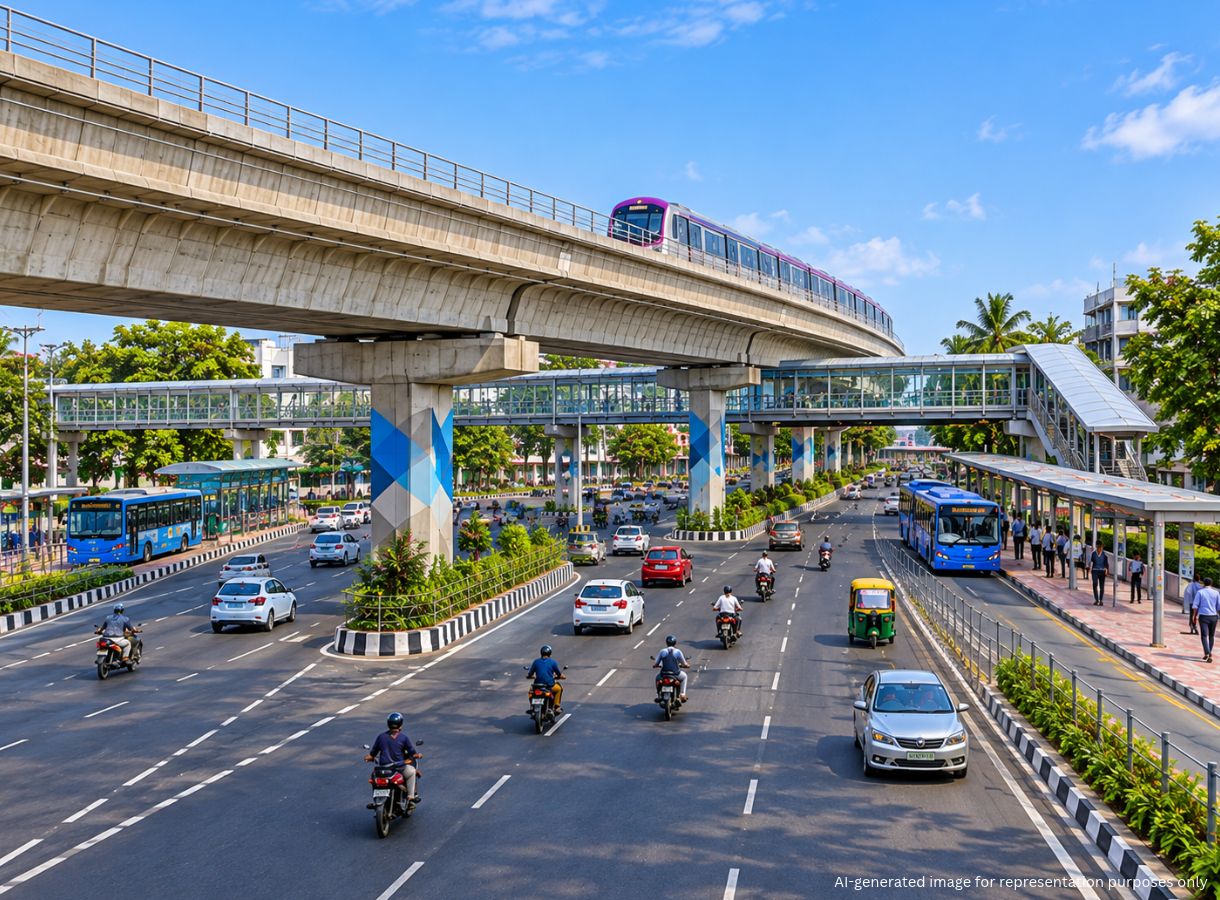
Bengaluru's growing transport needs have made metro connectivity increasingly important, particularly across its busy residential and commercial corridors. The Namma Metro expansion, led by Bangalore Metro Rail Corporation Limited (BMRCL), aims to increase the operational network to 175 km by December 2027, following a revision of the earlier 2026 target. The expansion is expected to improve connectivity, reduce dependence on road transport and provide better access to key destinations.
Traffic congestion and lengthy road journeys remain major difficulties for Bengaluru commuters. People travelling between residential neighbourhoods, employment hubs and the airport are among those affected by these transport constraints.
The expansion aims to address these difficulties through additional metro corridors, better connections between existing transport systems and extensions towards developing parts of the metropolitan region.
Bengaluru's metro expansion has progressed through multiple phases, with the first and second phases completed and Phase 3 receiving central government approval.
The existing Purple, Green and Yellow lines previously accounted for approximately 96 km of operational network. The network has since crossed 100 km, reaching approximately 103 km following the inauguration of the elevated Pink Line section on November 13, 2026. Passenger services on this stretch are scheduled to begin on November 14.
The 3.14 km Green Line extension between Nagasandra and Madavara also opened for commercial operations on November 7, improving metro access along Tumkur Road.
According to the revised expansion roadmap, approximately 41 km of additional metro lines are planned for commissioning during 2026. Another 38 km, including the Airport Line and the remaining Pink Line section, is scheduled for completion by December 2027.
Key developments include:
Daily commuters will gain additional rail connections across major traffic corridors, potentially reducing lengthy road journeys. Residents travelling to employment centres such as Electronic City, Whitefield and the Outer Ring Road will benefit from improved access to these commercial hubs.
Air travellers will have a fixed-time public transport alternative once the Blue Line connects the city with Kempegowda International Airport.
Property buyers and real estate investors could also benefit from improved connectivity around operational metro stations. Homes within walking distance of stations offer greater commuting convenience, while better transport access can support resale demand and commercial development around major junctions.
Businesses may benefit from improved employee connectivity, while emerging peripheral areas could gain better access to Bengaluru's established employment centres.
The expansion marks another major step in strengthening Bengaluru's public transport network. With the Pink Line progressing, the Airport and Outer Ring Road corridors approaching commissioning, and Phase 3 planning underway, the 175 km target could significantly improve citywide connectivity.
1. What is the target length of Bengaluru's Namma Metro network, and when is it expected to be achieved?
Bengaluru's Namma Metro network is targeted to reach 175 km of operational lines by December 2027. The revised timeline replaces the earlier projection of achieving the same target by 2026. Around 41 km of additional lines are planned for commissioning in 2026, followed by another 38 km by December 2027.
2. Which new metro lines are expected to become operational in Bengaluru by 2027?
The new metro lines include the remaining 13.8 km underground section of the Pink Line, connecting Dairy Circle to Nagawara, and the Blue Line corridors linking Silk Board, KR Puram, Hebbal and Kempegowda International Airport. The Pink Line underground stretch is expected between March and May 2027, while Blue Line sections are targeted for phased commissioning.
3. How will the Bengaluru Metro Airport Line benefit air travellers?
The Metro Airport Line (the Blue Line) will connect Central Silk Board, KR Puram and Hebbal with Kempegowda International Airport. Once operational, it will provide air travellers with a direct metro connection and a predictable alternative to road journeys affected by traffic congestion. Its commissioning is targeted across 2027, although some sections could extend into early 2028.
4. How will Bengaluru Metro expansion benefit daily commuters?
The expansion will improve connectivity between residential neighbourhoods and employment centres such as Electronic City, Whitefield and the Outer Ring Road. Additional metro connections are expected to reduce dependence on road transport and shorten commuting times. Operational stretches such as the Yellow Line have already demonstrated reductions in congestion on parallel roads.
5. Which Bengaluru areas are expected to benefit from Namma Metro Phase 3?
The proposed Phase 3 expansion includes corridors towards Tavarekere, Hosakote, Bidadi and Nelamangala. It also features the double-decker Orange Line, covering JP Nagar Phase 4 to Hebbal and Hosahalli to Kadabagere, alongside the proposed Red Line connecting Sarjapur and Hebbal. These developments aim to extend metro connectivity across more parts of the Bengaluru Metropolitan Region.
6. How can Bengaluru Metro expansion benefit property buyers and real estate investors?
Properties within walking distance of operational Namma Metro stations can offer better commuting convenience and resale potential. Improved connectivity may also support commercial development around major stations. However, buyers considering properties along under-construction corridors should account for the time required before metro services become operational, as some properties may carry premiums ahead of completion.