- Home
- Categories
- Cities
- Blogs
-
Go to Searching & Listing Page
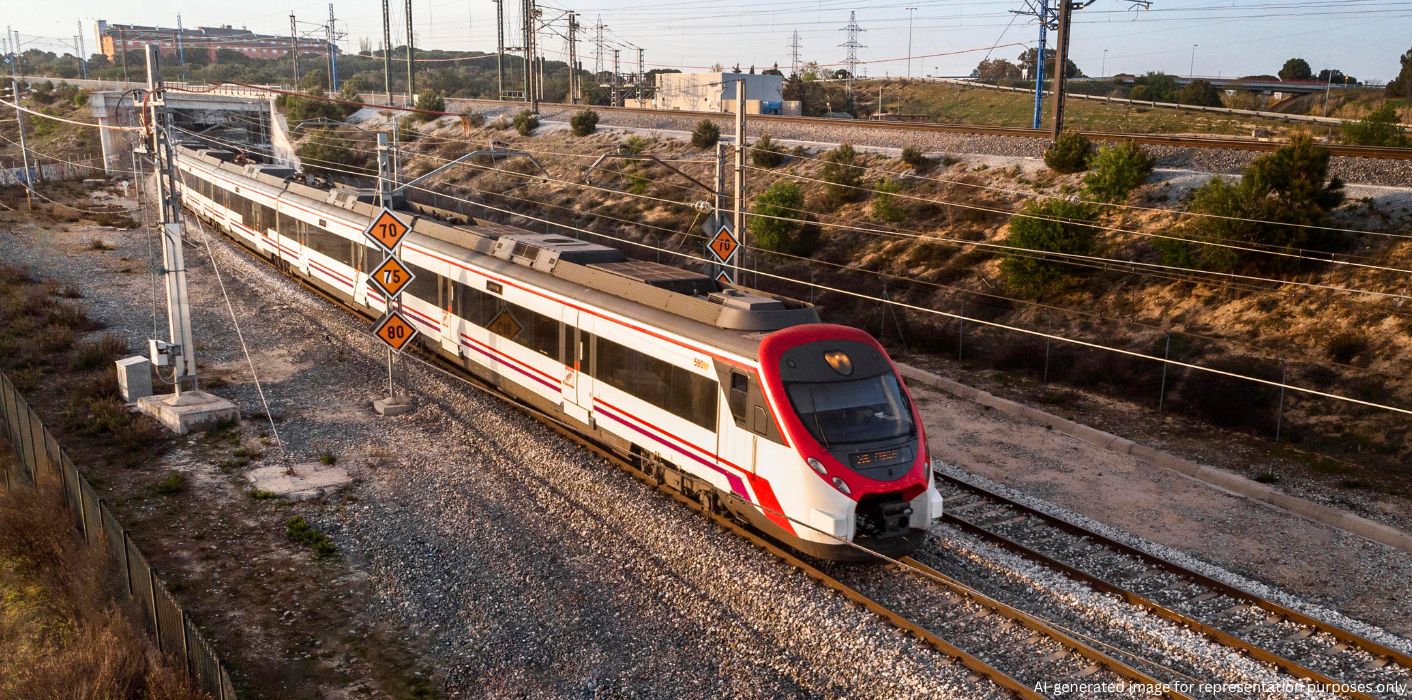
Bengaluru's growing suburban rail network is set for a major signalling upgrade aimed at making train operations safer and more efficient. Bi-RIDE has floated a Rs 1,017.19-crore tender to introduce the European Train Control System (ETCS) Level-2 across two suburban rail corridors. The technology will enable real-time train monitoring, improve operational safety and support better integration with future regional rail networks.
ETCS Level-2 is a radio-based railway signalling and train protection system that uses continuous wireless communication between trains and a central control centre. Deployed over 5G, it allows train movements to be monitored in real time without depending on conventional trackside signal lights.
The system also includes Automatic Train Protection (ATP), which monitors train speeds and safe braking distances. It can automatically slow down or stop a train if it exceeds permitted speed limits, reducing the risk of accidents caused by human error.
The project originally proposed Communications-Based Train Control (CBTC), similar to the technology planned for Namma Metro's Pink and Blue Lines. However, authorities subsequently approved ETCS Level-2 for the suburban rail network. Its wider interoperability with Indian Railways and proposed Regional Rapid Transit System (RRTS) networks is a key reason for the change.
Bengaluru's outer areas, including Heelalige, Rajankunte and Chikkabanavara, face connectivity challenges due to heavy road congestion and long commutes towards central parts of the city.
Rail operations also face limitations from conventional block signalling, which requires trains to maintain wider gaps and restricts service frequency. This affects commuters who depend on predictable journeys, particularly office workers, industrial employees and students. Freight operators are also among those affected by transport delays.
The new system is expected to support closer train intervals, allowing more services to operate during peak hours. Automated speed monitoring will strengthen passenger safety and improve service reliability, while reducing dependence on physical signalling equipment could lower long-term maintenance requirements.
The upgrade is also intended to reduce traffic congestion, improve mobility and minimise land acquisition requirements.
The primary beneficiaries will be daily commuters travelling between Bengaluru's outer residential and industrial areas and major city hubs. Transit operators and urban planners will also benefit from a standardised signalling network that can accommodate future regional rail connections.
The Rs 1,017.19-crore tender covers two sections of the Bengaluru Suburban Transport Project, with different installation schedules.
The Integral Coach Factory (ICF), Chennai, will manufacture 51 stainless-steel trainsets, each comprising three air-conditioned coaches with a capacity of around 350 passengers. The trains will operate at speeds of up to 80 kmph. The first four trainsets are expected in the 2027–28 financial year, with the remaining deliveries planned for 2028–29.
Bi-RIDE floated the international tender on November 5, 2026. The pre-bid meeting is scheduled for November 19, 2026, and bids close on January 5, 2027.
The ETCS upgrade marks an important step towards improving Bengaluru's suburban rail operations. However, the planned benefits will depend on timely contract awards, signalling installation and the completion of the two corridors, with services targeted to begin from December 2028 onwards.
1. What is the ETCS Level-2 signalling system being introduced in Bengaluru's suburban rail project?
ETCS Level-2 is a radio-based railway signalling and train protection system that uses 5G communication to monitor train movements in real time. It will be introduced across Bengaluru Suburban Transport Project corridors 2 and 4, replacing the earlier CBTC proposal. The system also uses Automatic Train Protection to regulate train speeds and prevent unsafe movements.
2. How much will Bengaluru's ETCS signalling project cost, and who is implementing it?
The Bengaluru Suburban Transport Project's ETCS Level-2 signalling upgrade has an estimated cost of Rs 1,017.19 crore, excluding GST and customs duty. Bengaluru Integrated Rail Infrastructure Development Enterprise Ltd (Bi-RIDE), a subsidiary of K-RIDE, has floated the international tender covering the design, manufacture, supply, installation, testing and commissioning of the system.
3. Which Bengaluru suburban rail corridors will receive ETCS Level-2 signalling?
The ETCS Level-2 signalling upgrade will cover two corridors. The 25-km Mallige Line (Corridor 2) will connect Baiyappanahalli Terminal and Chikkabanavara through 14 stations. The 46-km Kanaka Line (Corridor 4) will connect Heelalige and Rajankunte through 19 stations.
4. How will ETCS Level-2 improve safety and train operations in Bengaluru?
The ETCS Level-2 system will use continuous wireless communication between trains and a central control centre to monitor movements. Its Automatic Train Protection feature calculates safe braking distances and can automatically slow down or stop trains exceeding permitted speeds. It is also expected to support closer train intervals, improve service frequency and reduce signalling-related maintenance requirements.
5. How many trains will operate on Bengaluru's suburban rail network, and what are their specifications?
The Bengaluru Suburban Transport Project will receive 51 trainsets manufactured by Integral Coach Factory (ICF), Chennai. Each train will have three air-conditioned, stainless-steel coaches with a passenger capacity of approximately 350 people. The trains will operate at maximum speeds of 80 kmph, providing metro-style suburban transport.
6. When will Bengaluru's Mallige and Kanaka suburban rail corridors become operational?
The Mallige Line (Corridor 2), connecting Baiyappanahalli Terminal and Chikkabanavara, is targeting commercial operations by December 2028. The Kanaka Line (Corridor 4), connecting Heelalige and Rajankunte, is targeting a June 2029 opening. Their signalling installations are scheduled to take 21 and 30 months, respectively, after bidder or contractor selection.