- Home
- Categories
- Cities
- Blogs
-
Go to Searching & Listing Page
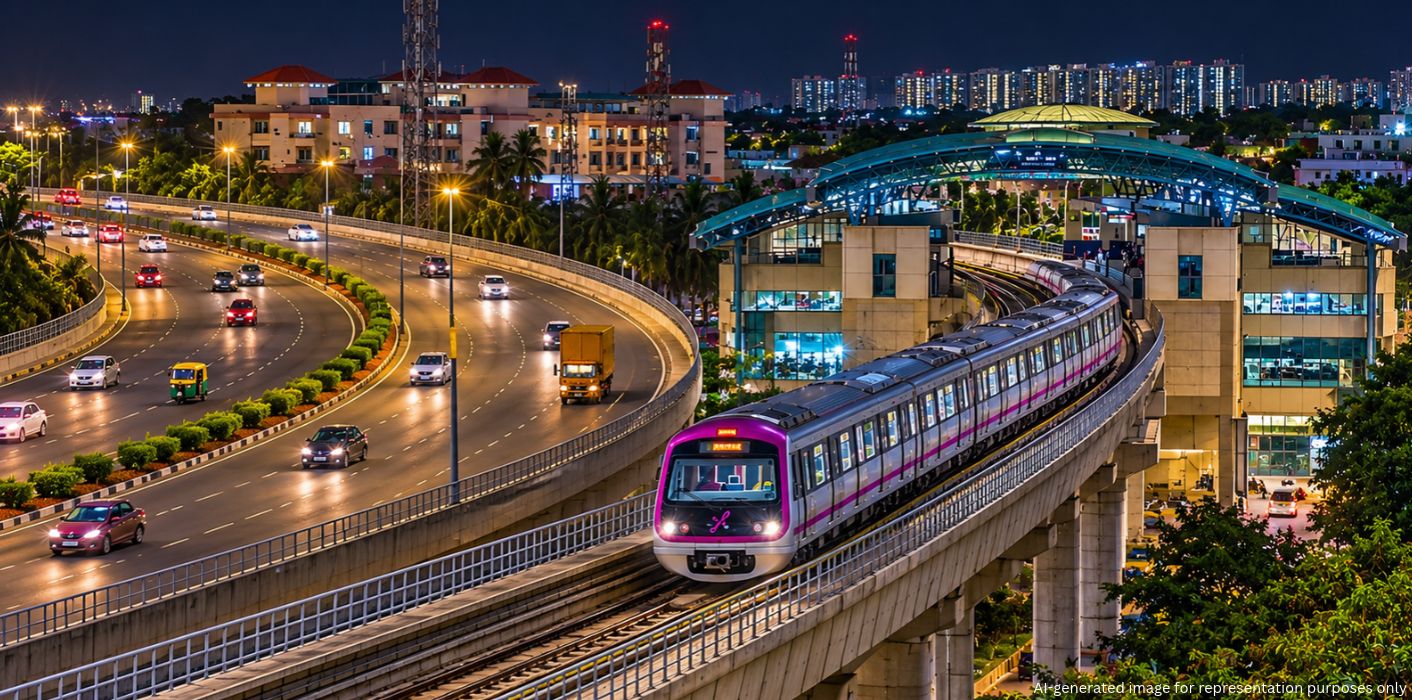
Bengaluru's traffic congestion makes daily travel challenging for residents, students and working professionals. The Bengaluru Metro Pink Line aims to improve connectivity between South and North Bengaluru, providing an alternative to lengthy road journeys. With the 7.5 km elevated stretch between Kalena Agrahara and Tavarekere receiving safety clearance, passenger services are awaiting the Government of India's announcement of an inauguration date.
Heavy traffic around Bannerghatta Road, central Bengaluru and the northern Outer Ring Road corridor affects daily commuters, including IT professionals, students and healthcare visitors. The Pink Line aims to reduce dependence on road transport, improve journey predictability and provide more affordable travel options.
By connecting residential neighbourhoods, employment centres and existing metro corridors, the project is expected to make cross city journeys easier. Its full benefits will become available once the remaining sections are operational.
Bengaluru's Pink Line will cover 21.25 km between Kalena Agrahara in the south and Nagawara in the north, with 18 stations across elevated and underground sections.
The cleared 7.5 km elevated stretch has six stations:
The remaining 13.76 km underground section will extend from Dairy Circle to Nagawara and is expected to open later, following further testing and completion.
Jayadeva Hospital station will connect the Pink Line with the Yellow Line, providing onward access towards Bommasandra and Electronic City. Connections with other metro corridors will also help passengers reach destinations across Bengaluru.
Several technical and administrative difficulties have affected the project's progress.
Although the elevated stretch has received safety clearance, completing the underground section and remaining operational requirements is essential to opening the full corridor.
The Pink Line is expected to serve several groups across Bengaluru:
The full corridor could ease pressure on congested roads, improve access to employment and healthcare, and reduce commuting stress. Better connections to Nagawara may also encourage commercial development beyond Bengaluru's established central business district.
Shifting more journeys to the metro could reduce road vehicle emissions and wear on surface infrastructure. Shorter, more predictable commutes may improve access to jobs, education and essential services.
Safety clearance marks an important step towards passenger services on the elevated section. The six stations could offer South Bengaluru residents a new commuting option once operations begin.
1. What is the route of the Bengaluru Metro Pink Line?
The Bengaluru Metro Pink Line will connect Kalena Agrahara in South Bengaluru with Nagawara in the north. The 21.25 km corridor will have 18 stations across elevated and underground sections.
2. Which stations are included in the Bengaluru Metro Pink Line's elevated stretch?
The 7.5 km elevated stretch includes six stations: Kalena Agrahara, Hulimavu, IIM Bangalore, JP Nagar 4th Phase, Jayadeva Hospital and Tavarekere.
3. When will the Bengaluru Metro Pink Line's elevated section open?
The 7.5 km section between Kalena Agrahara and Tavarekere has received safety clearance from the Commissioner of Metro Railway Safety. Passenger services are awaiting the Government of India's announcement of the inauguration date.
4. Which metro lines will connect with the Bengaluru Metro Pink Line?
Jayadeva Hospital station will provide an interchange between the Pink Line and the Yellow Line. This will help passengers connect to destinations towards Bommasandra and Electronic City.
5. What challenges have delayed the Bengaluru Metro Pink Line project?
The project has faced difficult underground conditions, including hard granite and sinkholes, contractor changes in 2021, train manufacturing delays at BEML and regulatory approvals for the new CBTC signalling system.
6. Who will benefit from the Bengaluru Metro Pink Line?
IT professionals, students, patients, healthcare workers and daily commuters are expected to benefit. The IIM Bangalore and Jayadeva Hospital stations will improve access to educational and healthcare destinations, while the Yellow Line interchange will help passengers travelling towards Electronic City.